Same core, same posture, same strength — two very different roads to get there. Here's the honest difference between reformer and mat pilates, and why you don't have to "earn" your way onto the reformer.

Reformer vs. Mat Pilates: Which Should a Beginner Start With?
Reformer and mat Pilates build the same things — a stronger core, better posture, real everyday strength — they just take different roads to get there. Mat uses your own bodyweight and needs nothing but the floor. The reformer adds a spring-loaded machine that can support you as much as it challenges you, which is what makes it surprisingly friendly for a nervous beginner. That's the short answer.
Here's the longer one, plus the thing a lot of guides won't tell you: you do not have to spend months on the mat before you're "allowed" on the reformer. That's an old rule. Let's break down the real difference so you can pick what fits you.
Quick takeaways
Mat Pilates uses your bodyweight; reformer Pilates adds springs, straps, and a sliding carriage.
Both build core strength, posture, and control — the results overlap a lot.
The reformer's springs can make movements more supported, so beginners can start there directly.
Mat is the most affordable and portable; the reformer gives you resistance and guided form.
You don't have to "graduate" from mat to reformer. Start wherever you'll actually keep showing up.
What's the actual difference between reformer and mat Pilates?
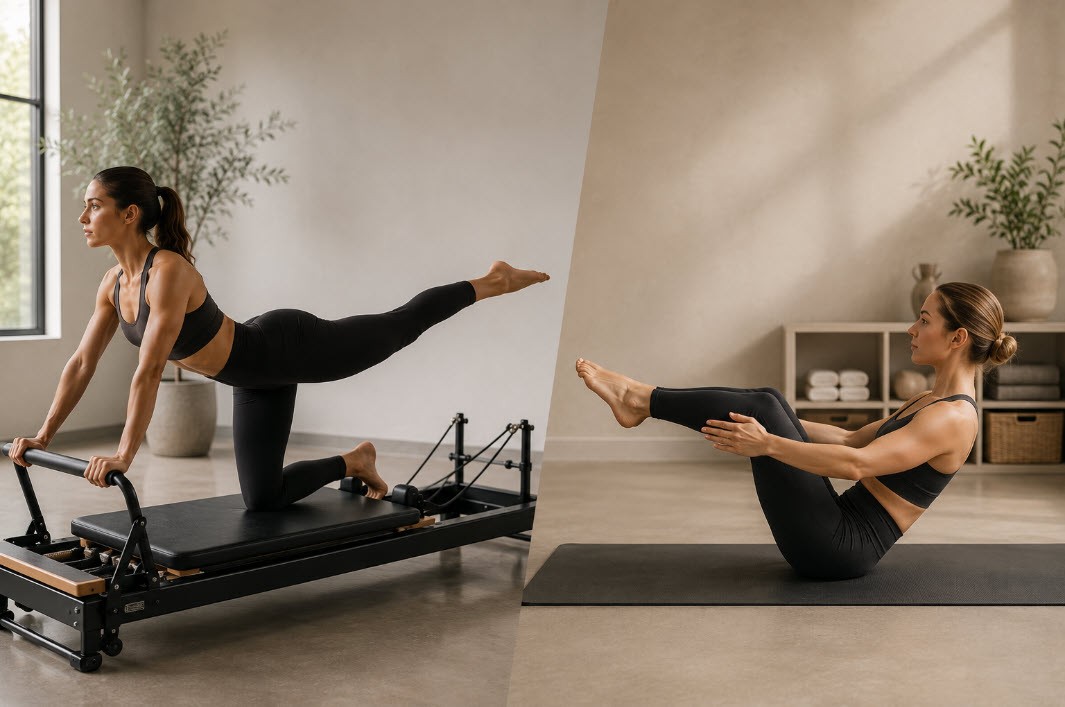
Same method, different tools. Mat Pilates is exactly what it sounds like — Pilates on a mat, using your bodyweight and gravity for resistance. The reformer is a machine: a carriage that slides against adjustable springs, with a footbar and straps you push and pull against. New to the machine itself? We break it all the way down in what is reformer Pilates.
Reformer Pilates | Mat Pilates | |
|---|---|---|
Equipment | Spring-loaded machine (carriage, footbar, straps) | A mat, and that's it |
Resistance | Springs — adjustable up or down | Your own bodyweight |
Guidance | Machine helps guide your form | More self-directed |
Where | In a studio | Anywhere |
Cost to start | Higher — equipment + coaching | Low — just a mat |
Beginner feel | Supported and structured | Accessible but on your own |
Neither one is "real Pilates" and the other a knockoff. They're two sides of the same practice.
Is mat or reformer Pilates better for beginners?
Honestly? Either can be a great start. It comes down to what makes you more likely to keep going.
Mat is wonderful if you want to move at home, on your own schedule, with zero equipment. The trade-off is that it's more self-directed — no machine giving you feedback, and it can feel harder to know if you're doing it right.
The reformer often feels friendlier to a nervous first-timer, which surprises people who assumed the machine would be intimidating. The springs carry some of your weight and guide your range of motion, so the movements feel controlled instead of confusing. And in a coached class, someone's setting the machine up for you and watching your form the whole time.
The old advice that you must do months of mat before reformer? You can skip it. Plenty of people start straight on the reformer and never look back. Curious what that first class feels like? Here's exactly what to expect.
Do you get the same results from reformer and mat?
Mostly, yes — a stronger core, better posture, more control, more flexibility. The destination is similar. What changes is the ride.
The reformer's adjustable springs let you fine-tune resistance, so you can go lighter while you learn and add load as you get stronger. That progression is a big reason people stick with it. Mat builds a deep foundation of control because there's nowhere to hide — it's all you. Both work. Both are worth your time.
Which is more affordable and convenient?
Mat wins on pure cost and convenience: a mat is cheap, and you can do it anywhere, anytime. That's a genuine strength, and we'll say so plainly.
The reformer asks more of you — you need a studio and the machine — but that's also where the value is: real equipment, adjustable resistance, and a coach who actually sees you. You're not paying for a mat. You're paying for guidance and a room that keeps you coming back.
So which should you choose?
Start with whichever one you'll actually show up for. That's the whole game.
If you want... | Start with... |
|---|---|
To move at home for next to nothing | Mat Pilates |
Adjustable resistance you can dial in | Reformer Pilates |
A coach watching your form in real time | Reformer Pilates (small-group) |
To build a foundation with zero equipment | Mat Pilates |
Structure, community, and a machine that supports you | Modern reformer |
If what you want is structure, resistance you can dial in, and someone in your corner while you learn, that's exactly what modern reformer is built for. Our strength-first method is designed to meet total beginners right where they are — no experience, no "earning it," no judgment.
How do I try modern reformer Pilates?
If you're near Fort Worth, the easiest way to feel the difference is to try it: 21 days of unlimited classes for $99 at sculptme. Your 21-day clock starts on your first class, so life can happen without burning your trial. Come as often as you like, see how the reformer feels for your body, then decide on your own terms. Start your 21 days for $99, or see the studio in Fort Worth first.
Movement that changes — mind and body. Whichever road you start on, you can do this. We're here for you.
About the Author
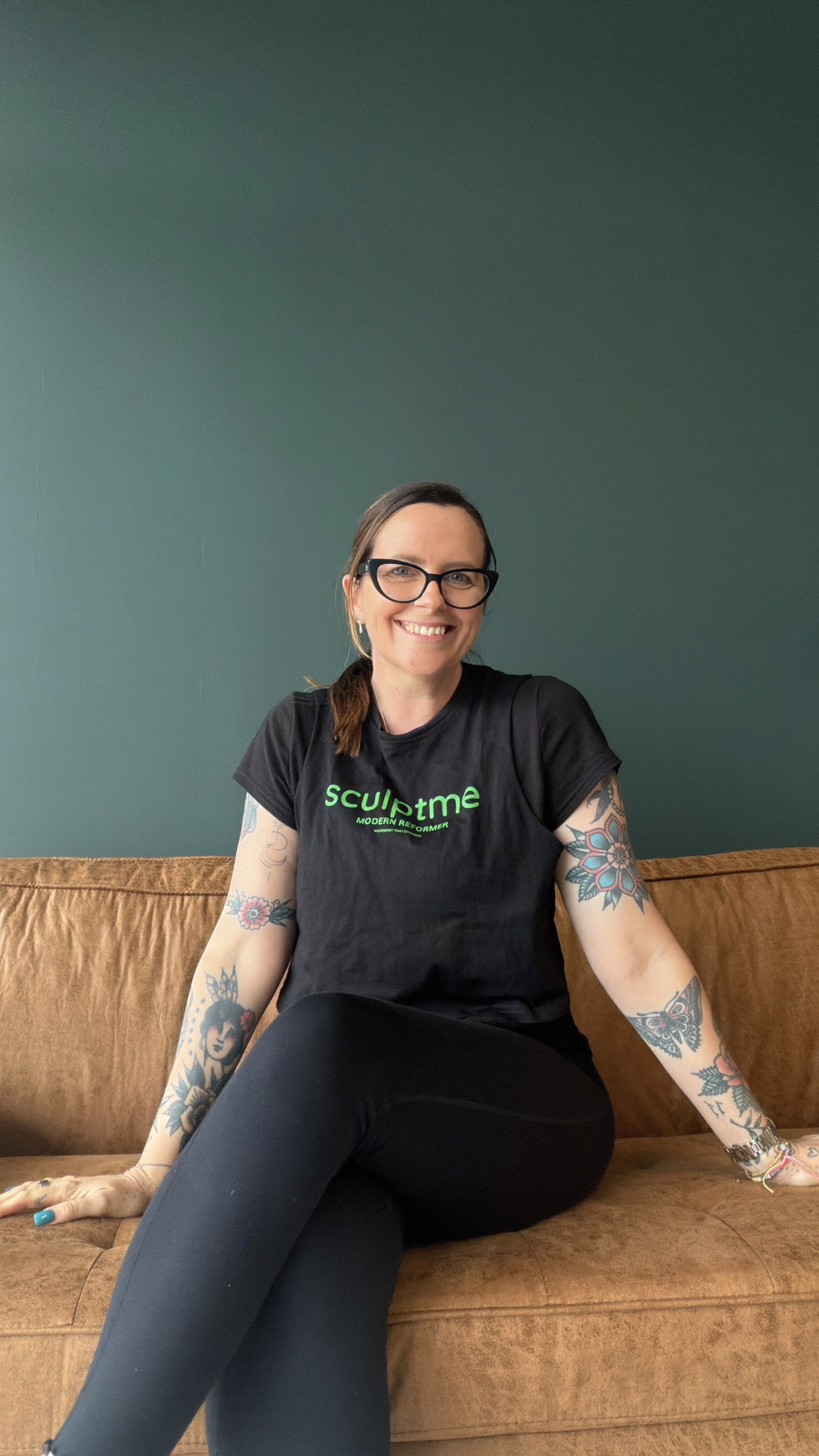
Nicole has 15 years teaching reformer Pilates across two continents — Australia to the U.S. — and still believes the best is ahead of you. She built sculptme to be the room where you get stronger and actually feel supported doing it.